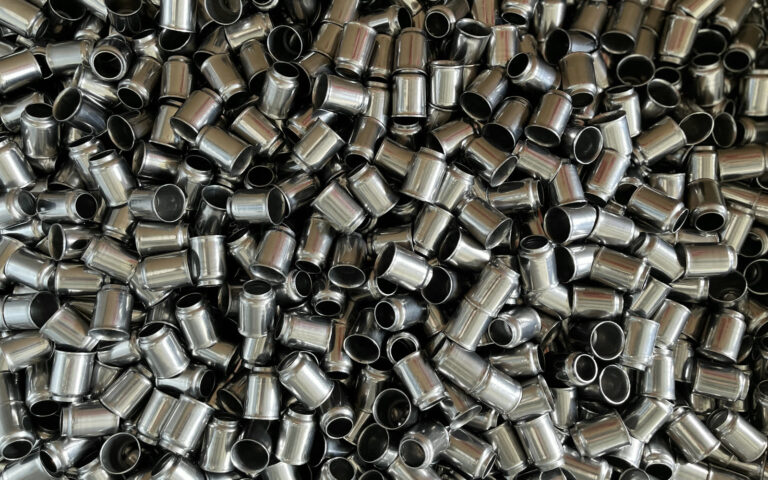
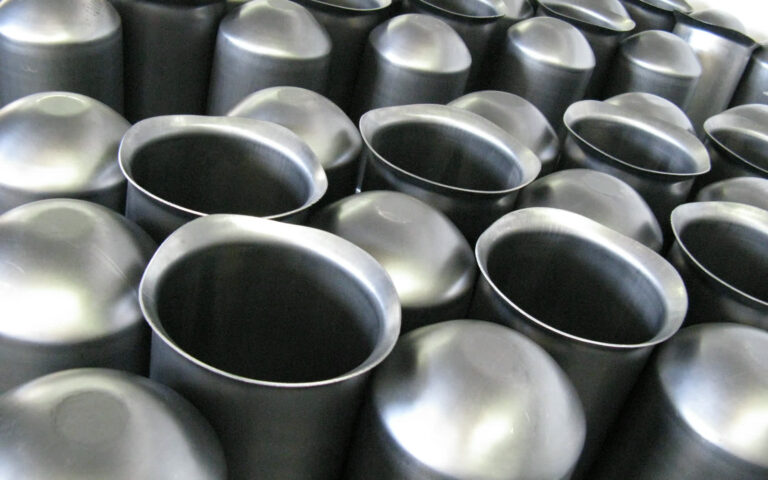
Hose sleeves

Home/Heat treatment
Contract annealing for industry and trade: we anneal your components as a contract service – as single parts, bulk material or in series. You deliver the parts; we take care of annealing, inspection and return dispatch.
We carry out annealing treatments exclusively in protective atmospheres or in vacuum. The decisive advantage is that the oxygen-free atmospheres reliably prevent oxidation of the component surfaces. The result is bright metallic workpieces without scale formation or temper colours. Downstream process steps such as pickling or blasting are not required, which reduces production effort and increases process reliability.
Whether single parts, bulk material or series production: we set the mechanical properties in a targeted manner. Our computer-controlled systems guarantee reproducible process sequences and documented charge parameters for the highest quality requirements.
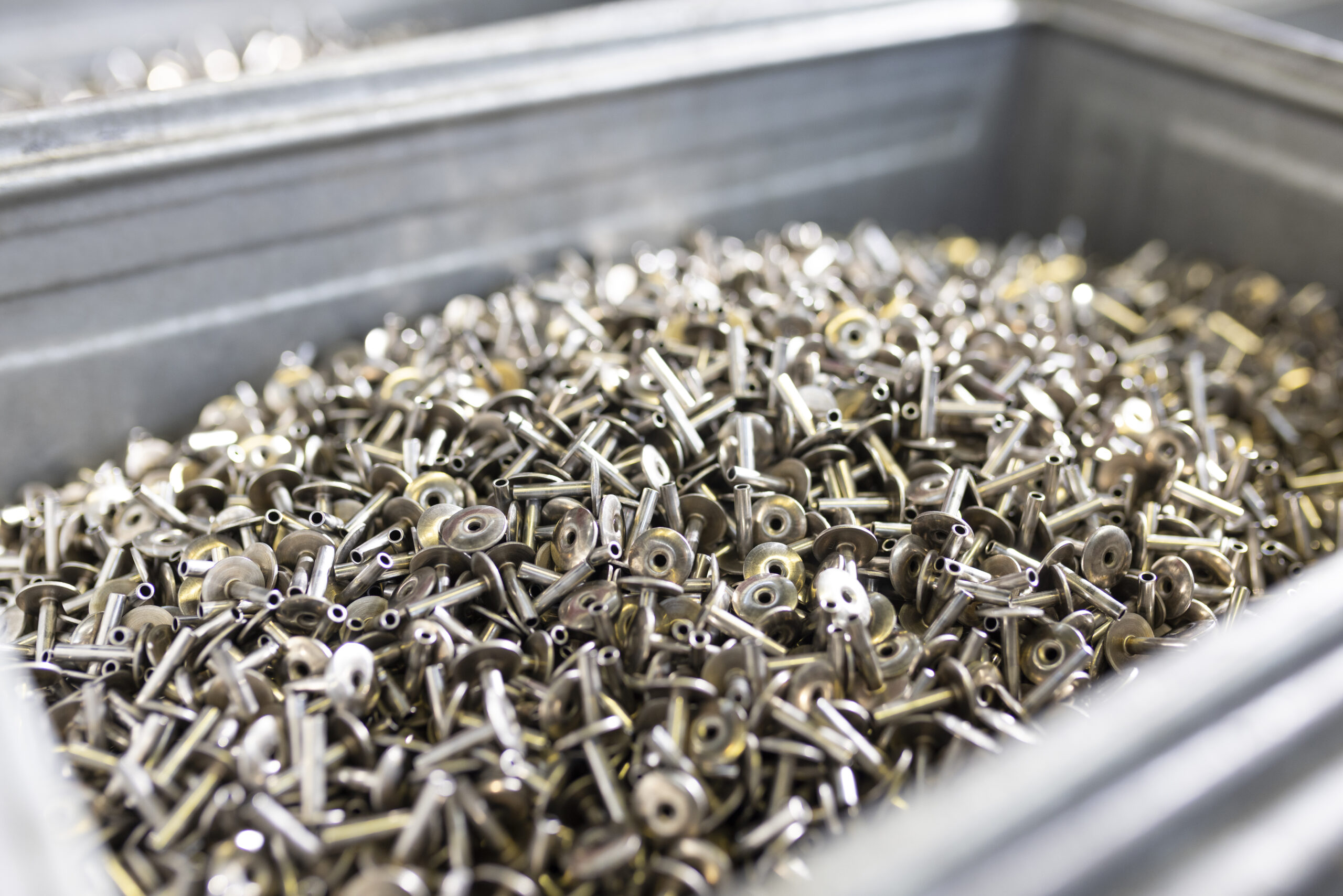
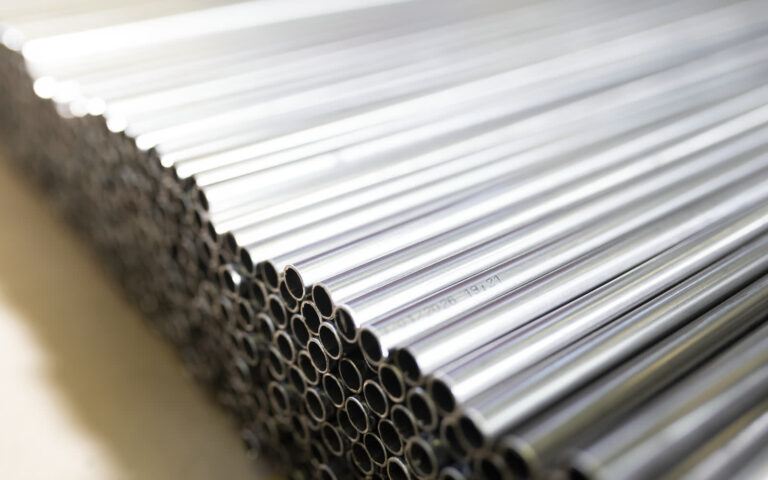
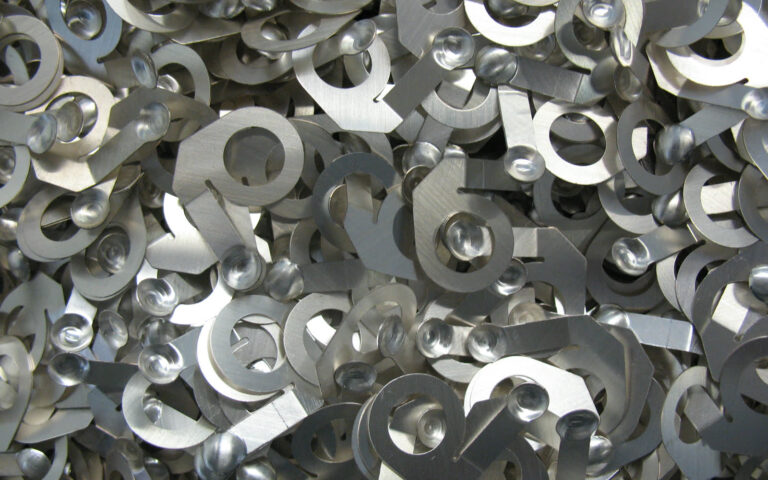
We offer various annealing processes to set the properties of your materials in a targeted manner.
We can carry out heat treatments in continuous furnaces with protective atmosphere or in vacuum furnaces.
Our five continuous furnaces with protective atmosphere differ in the usable width of their furnace belts and in the protective atmospheres available. For unalloyed steels, exogas atmospheres are used. For alloy steels and stainless steels, our furnaces run on nitrogen-hydrogen mixtures. In the continuous furnaces with protective atmosphere, components with dimensions of up to 600 mm in width and 185 mm in height can be treated.
In our vacuum furnaces – we operate five different units of various sizes – the oxygen is pumped out of the furnace chambers by vacuum pumps. Here, we distinguish between two atmospheres, medium vacuum and high vacuum, which are used depending on the material. In high vacuum, the residual oxygen content is reduced by several orders of magnitude. This virtually prevents oxidation reactions, resulting in bright metallic, scale-free surfaces.
Our largest vacuum furnace has a chamber size of 2,000 × 900 × 900 mm and can be operated under high vacuum. The maximum charge weight is approx. 1,300 kg.
Thanks to the large number of different furnace systems at our disposal, we are able to offer you the technically most appropriate and most economical quotation for your components. By coordinating with you and running straightforward trials, we quickly achieve the result you require.
In stress relief annealing, the material is heated to a comparatively low temperature below the recrystallisation temperature. The aim is to reduce internal stresses without significantly changing the microstructure. These stresses often arise from welding, casting or machining. The process reduces the risk of distortion or cracking. Mechanical properties such as strength and hardness are largely retained.
Soft annealing is carried out at temperatures just below the austenitising temperature, with slow cooling. The aim is to reduce hardness and improve machinability. The microstructure is modified so that spheroidal cementite forms. This leads to a significant reduction in resistance to plastic deformation. Soft annealing is often used for high-carbon steels before machining.
In normalising, steel is heated to a temperature above the austenitising temperature and then cooled in still air. The aim is a fine-grained, homogeneous microstructure with improved mechanical properties. The process eliminates microstructural inhomogeneities such as those that occur after casting or forging. The result is a uniform distribution of ferrite and pearlite. Normalising often serves as a preparatory process for further heat treatments.
In recrystallisation annealing, a cold-formed material is heated to a temperature above the recrystallisation temperature. The aim is the formation of new, stress-free, uniform crystal grains. This reduces the dislocations and residual stresses caused by cold forming. Strength decreases, while ductility and formability increase significantly. This process is often used for metals that are to be processed further or formed again.
Magnetic annealing (demagnetising anneal) is a heat treatment process for the targeted reduction or adjustment of the residual magnetisation (remanence) of ferromagnetic materials. The components are heated to a defined temperature below the Curie temperature and cooled again under controlled conditions. This process realigns the magnetic microstructure of the material, minimising unwanted residual magnetic fields. The process is used in particular for precision components in which residual magnetism can lead to malfunctions. Magnetic annealing thus improves electromagnetic neutrality and increases process and component reliability in downstream applications.
We do not just handle standard tasks. Our expertise is extensive (e.g. annealing of additively manufactured components, metal powders or demanding copper contacts) and enables us to offer a solution even for special tasks or requirements.
In addition to the heat treatment itself, the charge arrangement and the use of the right charging fixtures also play an important role. In this way, geometric deviations can be reliably avoided.
After the furnace comes the packaging, which also needs to be specifically coordinated and adapted to the requirements.
We look at and evaluate the entire process, thus offering you maximum process reliability, efficiency and cost-effectiveness.
Quality not just in the furnace! For us, it starts with your order and the delivery of your components. Then our departments – order processing, logistics, work preparation, production and QA – go into action for you. Our process organisation ensures smooth throughput and on-time completion.
Do you need documentation for your components that goes beyond the delivery note? On request, you will receive, for example, annealing records (temperature–time charts) and hardness test results (before/after treatment) to verify the required properties.
As a service-oriented company, we combine a high level of technical advisory expertise with excellent availability.
We attach great importance to open, cooperative and transparent communication. Fast response times and well-founded technical dialogue enable efficient, focused collaboration on an equal footing.
Our quotations are clearly structured, precisely worded in technical terms and consistently tailored to your specific requirements.
Identification of the materials and checking of the requirements (target hardness, annealing specification).
Professional cleaning (if necessary) and placement of the components to prevent distortion due to their own weight and to ensure uniform heating throughout.
Running the defined temperature profile under vacuum or protective atmosphere.
Verification of the results by hardness measurement (HRC, HV, HB) or metallographic examination (externally if required).
Safe return dispatch of the bright parts, protected against corrosion and damage.
Do you want the component surface to remain clean despite heat treatment? Then we need to look at the oxygen and exclude it during heat treatment. We achieve this by using our continuous furnaces with protective atmosphere and our vacuum furnaces. In both types of system, the exclusion of oxygen reliably prevents oxidation of the surface. The surfaces remain bright and show no discolouration. This makes direct further processing possible.
Yes, 3D-printed metal parts can be treated. They, too, consist of specific metal powders. Only their density and homogeneity differ from those of cast or formed components. Heat treatments even help to significantly improve the mechanical properties of printed components.
Yes, hardness testing is an important method for us to assess and classify the changes in a material caused by heat treatment. We can test the hardness before and after heat treatment (e.g. Rockwell, Vickers, Brinell). The results show us whether individual parameters may still need to be optimised. Hardness is even measured on metal powders after their heat treatment.
Apart from the treatment temperatures, the main difference between these two annealing processes is their purpose. Stress relief annealing is always used when residual stresses in the workpiece, e.g. caused by forming or machining, are to be eliminated. The microstructure remains unchanged.
Recrystallisation annealing, on the other hand, also affects the microstructure of the material. The crystals are repositioned, dislocations are dissolved and residual stresses are reduced.
Call us directly
+49 2373 9772-30or
We’ll call you back
Within one working day.
Thank you! We’ll get back to you within one working day.