
Home/Pre-assembly and testing
Component assembly and testing
We have even more to offer
Brazed assemblies including pre-assembly and final inspection
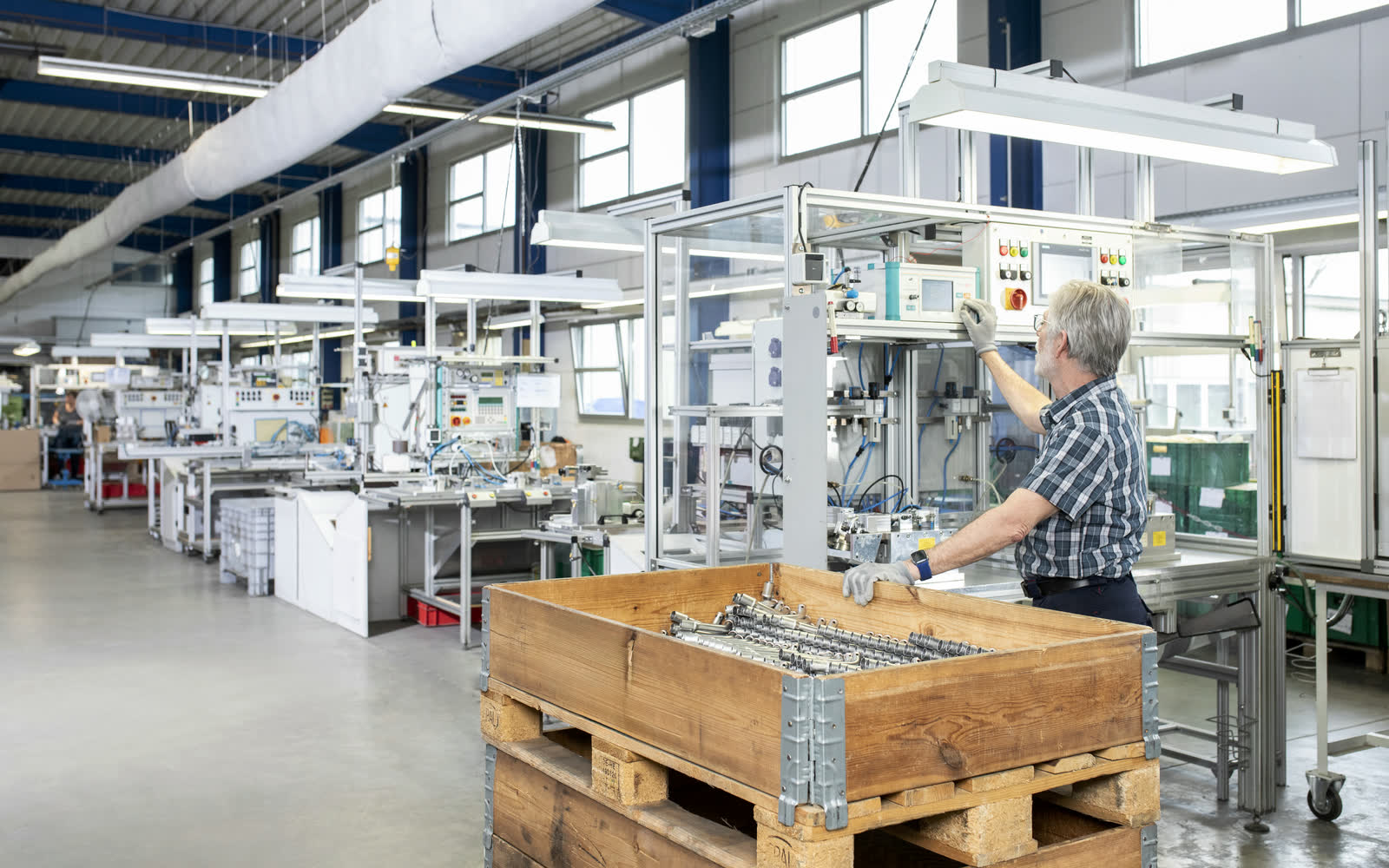
Even in the first years after Harnischmacher GmbH was founded, it became clear that our customers were happy to hand over full responsibility for brazed assemblies to us. Within a short time, the independent ‘Pre-assembly’ production area was established. Since then, it has been continuously and consistently developed further.
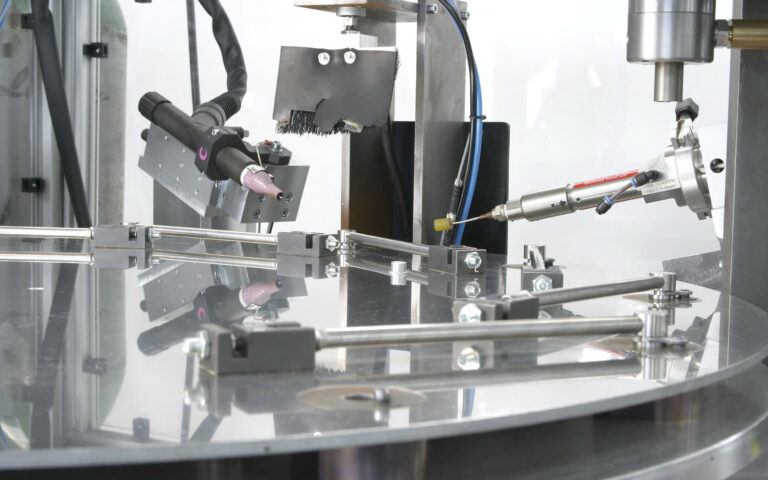
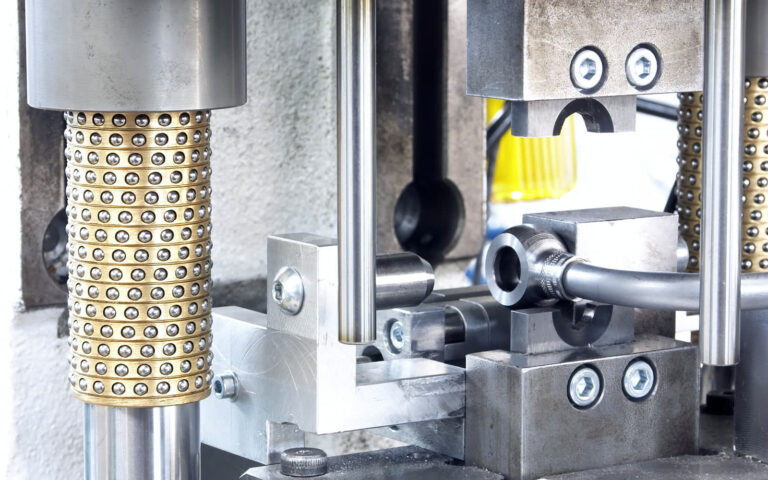
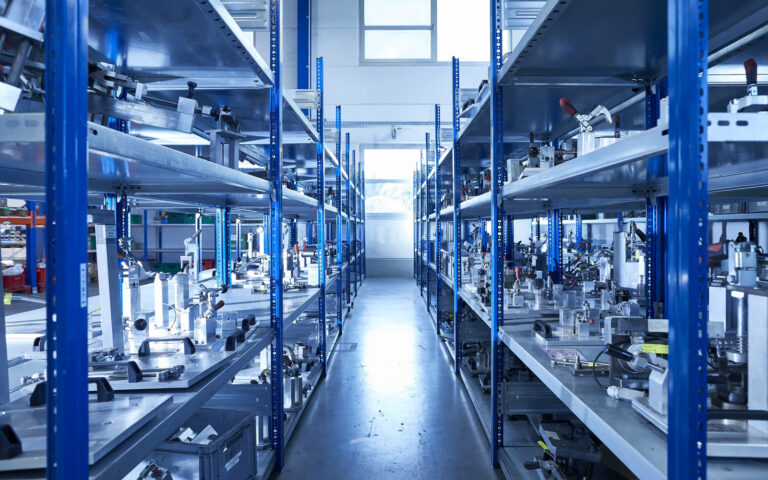
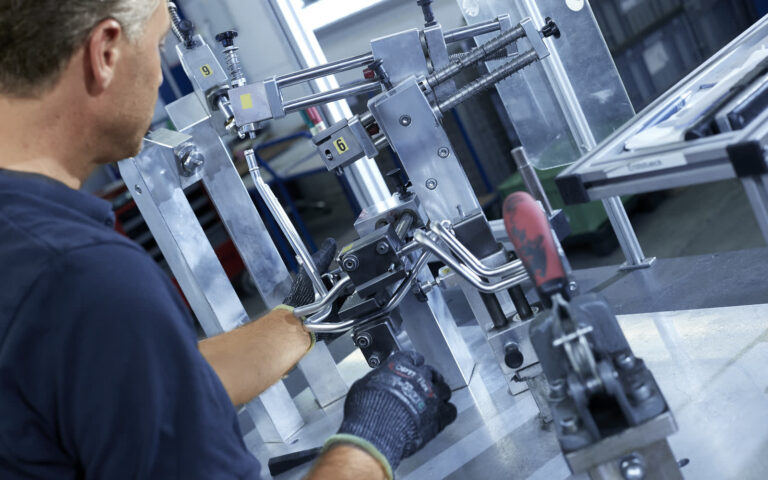
Pre-assembly takes care of pre-fixing all components of a brazed assembly in the correct position. This is necessary because we no longer have any influence on the component geometry during the actual brazing process. The important component dimensions are therefore secured by pre-fixing. Today, there is a wide range of pre-fixing methods. The fixtures required for this are designed in-house and built in our own toolmaking department.
Filler metal is applied to the pre-fixed components, which are then brazed in one of our furnace systems. We can ensure that the component specification is met through comprehensive quality controls. From gauge inspections and straightening operations through to leak testing with subsequent marking and labelling, we establish an agreed production status that allows the brazed assemblies to be processed further immediately after delivery. This reduces logistical effort and interfaces.
This ‘everything from a single source’ concept is firmly integrated into our day-to-day work, and many of our customers are happy to take advantage of it.
For every task
The right solution
Our additional services at a glance
Methods for pre-fixing components
Methods for testing components
Advantages
Everything from a single source – with assured quality
Logistical advantage: combining brazing, assembly and testing at one site eliminates additional transport routes and the coordination effort between several service providers. This reduces lead times and increases process reliability. You receive a ready-to-install product that can be integrated directly into your final assembly.
Custom fixtures: for assembly and testing, we draw on our own fixture construction department. We design and manufacture custom fixtures and, if required, special-purpose machines that are precisely matched to your component.
Every component leaves our premises only after it has been successfully tested. Whether leak tightness, dimensional accuracy or strength – we test to your specifications, thus ensuring consistently high series quality.
We select the optimum joining process for you
Pre-assembly of brazed assemblies
Press-fitting / staking
Staking and press-fitting are mechanical joining processes for permanently fixing components without additional fasteners. In staking, material is locally plastically deformed to connect components with a form fit, whereas in press-fitting, components are joined with a force fit or form fit by the targeted application of force. Both processes are characterised by high process reliability, reproducibility and cost-effective integration into series production.
Laser welding
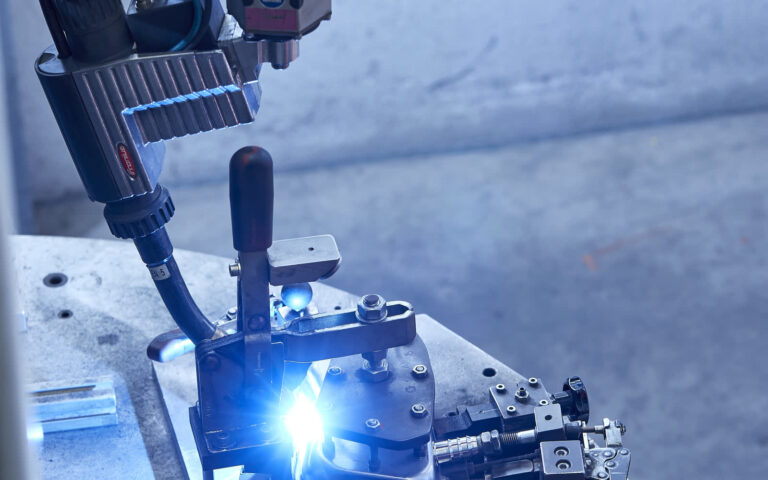
Laser welding is a precise joining process in which components are metallurgically bonded by means of focused laser radiation. The high energy density creates a locally confined melt zone with minimal heat input, which reduces distortion and effects on the microstructure. The process enables reproducible, high-strength joints and is particularly suitable for demanding applications in series production.
Resistance welding
Resistance welding is a thermal joining process in which components are metallurgically bonded by electric current and the resulting resistance heating. Heating takes place locally at the joint while mechanical pressure is applied to the components at the same time. The process enables short process times and high reproducibility and is particularly suitable for automated series processes with high volumes.
CMT welding
CMT welding (Cold Metal Transfer) is a modified arc welding process in which material transfer is precisely regulated by controlled wire movement and pulsed current flow. Thanks to the cyclical retraction of the wire, droplet transfer is virtually spatter-free with significantly reduced heat input. The process enables reliable, low-distortion joints and is particularly suitable for thin-walled components and different material combinations.
TIG welding
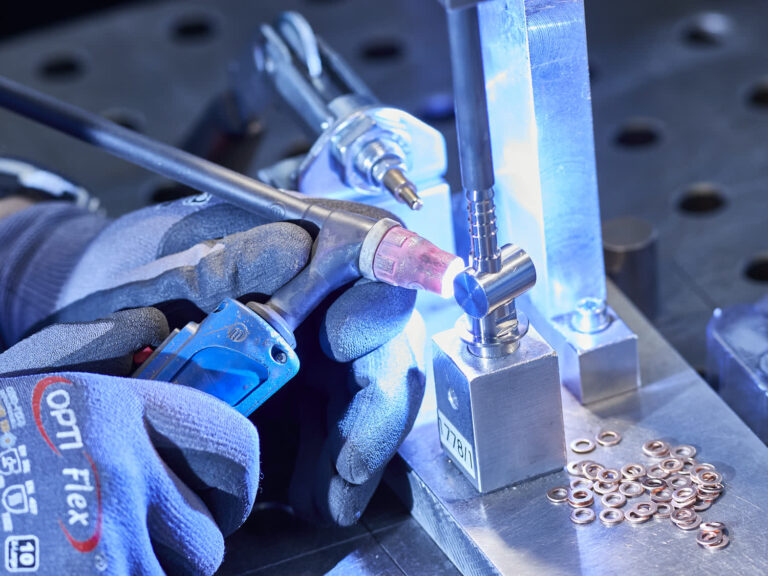
TIG welding (tungsten inert gas welding) is an arc welding process in which the components are joined by means of a non-consumable tungsten electrode under a shielding gas. The arc ensures precise and controlled melting of the material. The process is characterised by very high weld seam quality, exact controllability and clean, spatter-free welding results.
We test individually according to your requirements
Testing of brazed assemblies
Visual inspection
100% visual inspection is a basic inspection applied to all components brazed in our furnaces. It checks whether the filler metal has melted completely, whether the surface has been wetted by the molten filler metal and whether a continuous fillet has formed in the area of the brazed joint. If this inspection is passed, the brazed joint can be considered successful.
Leak testing
Differential pressure and helium testing are established leak testing methods for brazed assemblies, offering different levels of accuracy. In differential pressure testing, the component is pressurised with air or test gas and the pressure drop is measured, which allows leaks in the medium tightness range to be reliably detected. Helium testing, on the other hand, uses helium as a tracer gas and, thanks to highly sensitive detection, can identify even the smallest leak rates. This makes it considerably more precise, and it is used for the most stringent tightness requirements. Leak rates and test pressures are agreed jointly with you.
Gauge inspection
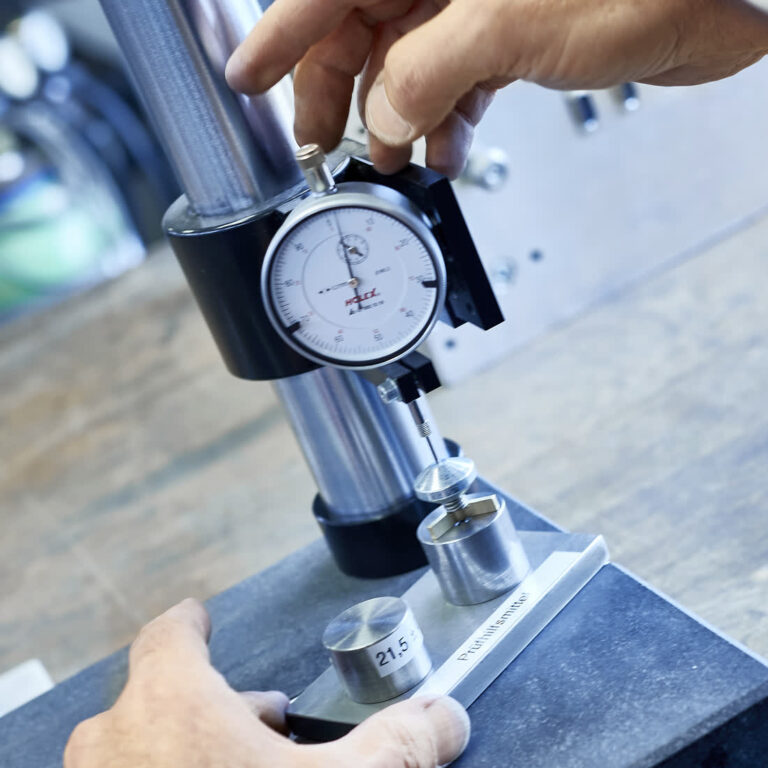
Gauge inspections are simple, practical test methods for checking the dimensions and function of brazed components. Defined test gauges are used to quickly check whether components are within the specified tolerances and achieve the required accuracy of fit. Despite the low testing effort, the method delivers highly meaningful results and ensures reliable quality assurance in series production.
Further tests
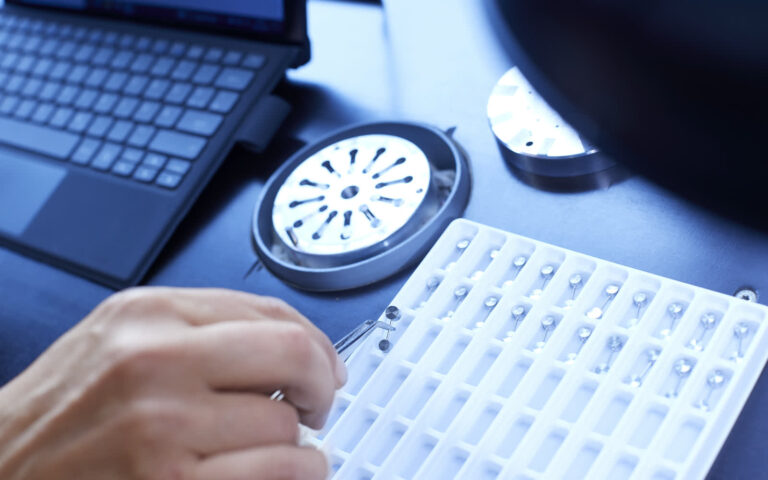
Metallographic section tests are destructive test methods for the detailed analysis of brazed joints in cross-section. By preparing the sections and evaluating the micrographs under the microscope, filler metal flow, diffusion zones and microstructures can be assessed precisely. The method enables a well-founded evaluation of joint quality and serves as an important basis for process monitoring and optimisation during series production.
FAQ
Frequently asked questions about assembly and testing
Which leak tests are possible?
We offer both pressure decay testing with air and highly accurate helium leak testing, depending on the tightness requirements of your components.
Can you also supply welded assemblies?
Yes, we offer laser welding as well as TIG, CMT and resistance welding to complete assemblies before or after brazing.
Are fixtures required?
Many assembly and testing tasks require specific fixtures. We design and build these individually for your project.