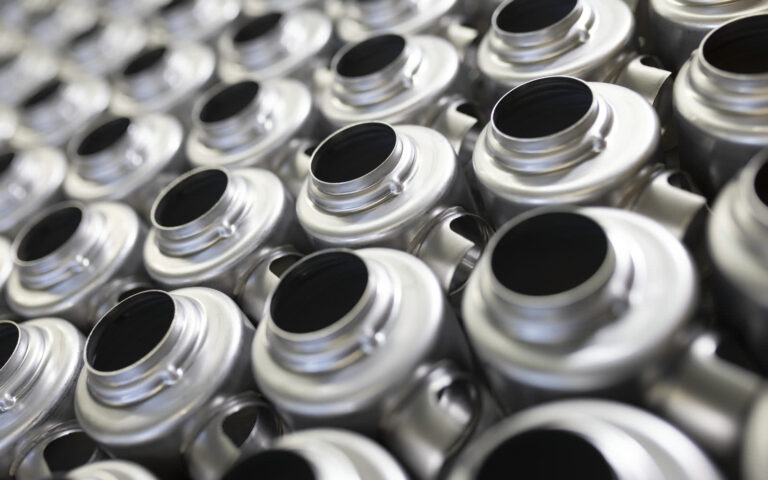
Housings

Home/Controlled-atmosphere brazing
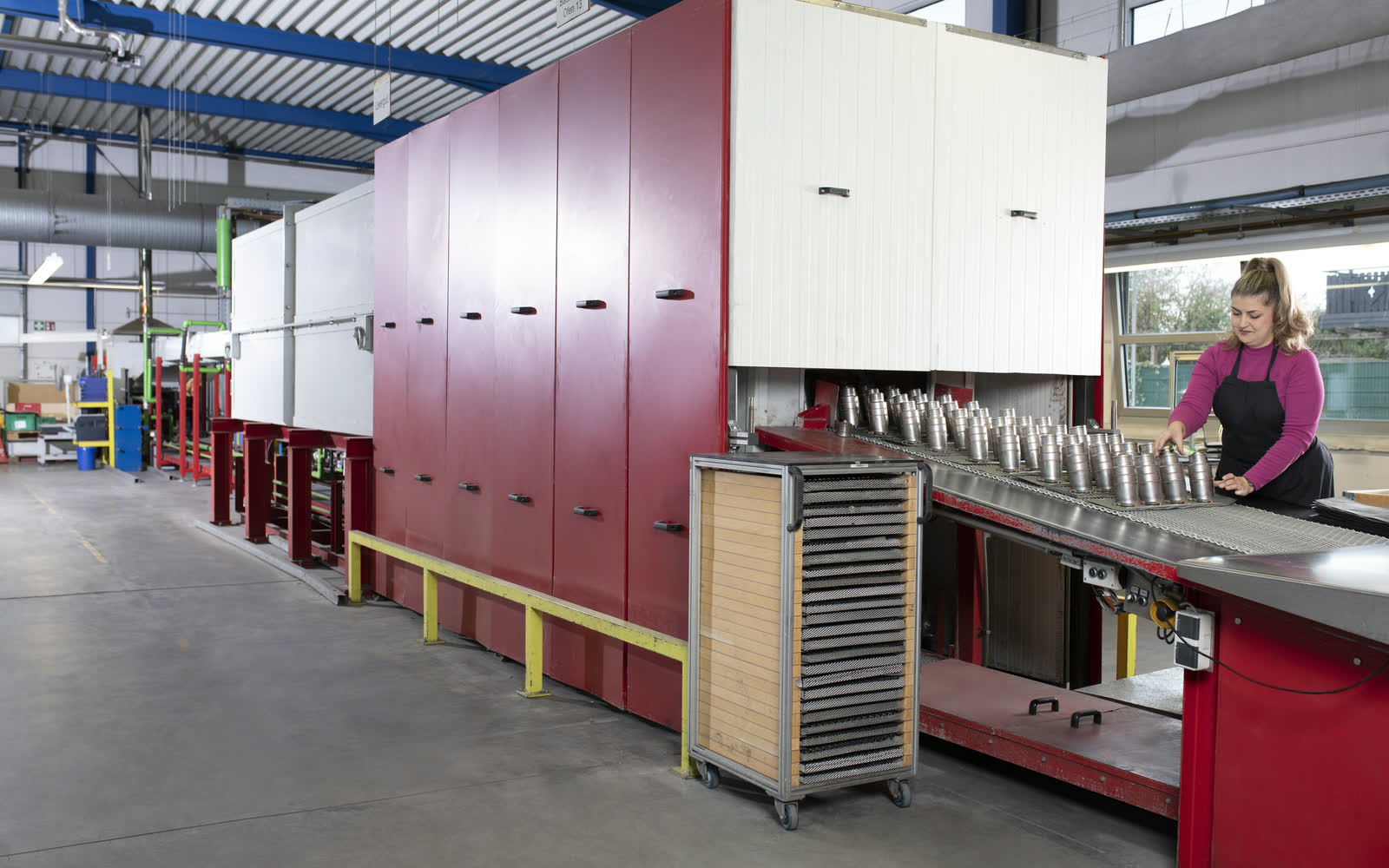
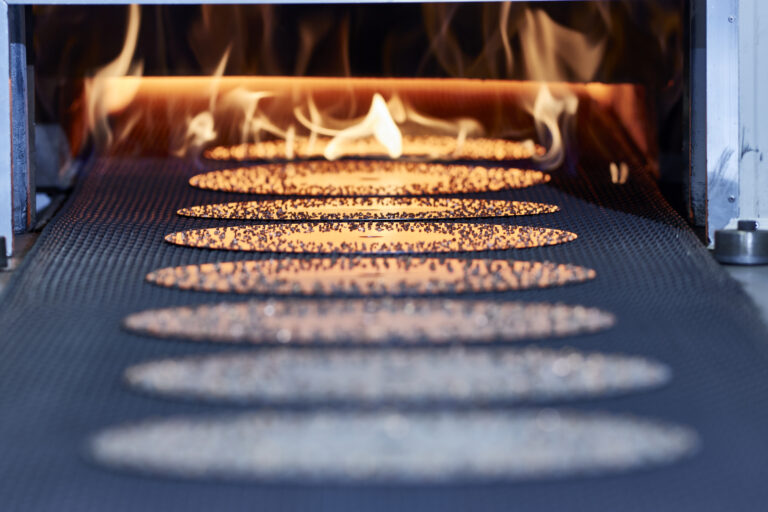
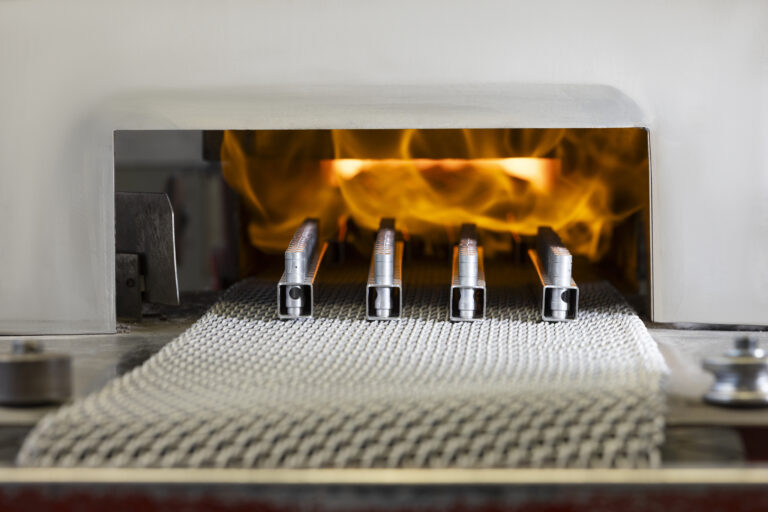
When brazing in continuous furnaces under protective atmosphere (furnace brazing), components are conveyed continuously through a furnace while a controlled protective atmosphere (e.g. exogas, H2/N2) reduces existing oxides on the component surfaces and prevents re-oxidation.
The components pass through several temperature zones that are precisely matched to the filler metal used and the base materials. Thanks to the protective atmosphere, high-quality brazed joints can be produced entirely without flux. The components leave the furnace shiny and clean, so no additional cleaning is necessary.
This process is particularly suitable for series production in large quantities, as it is a continuous, reproducible process. Our various furnace systems can join unalloyed steels as well as stainless steels.
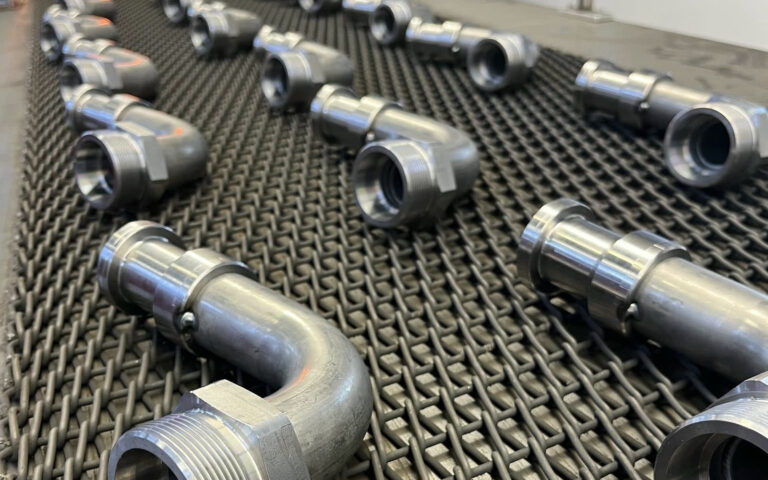
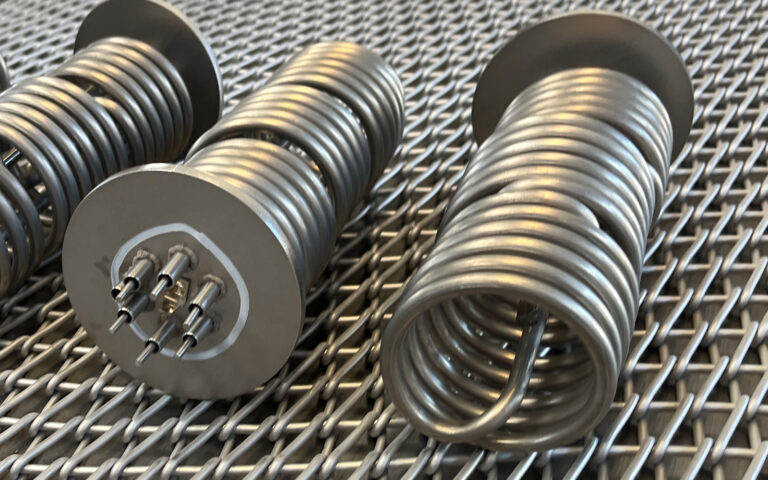
Typical components are complex fluid-carrying pipework systems (e.g. for the automotive and hydraulics industries) with numerous brazed joints.
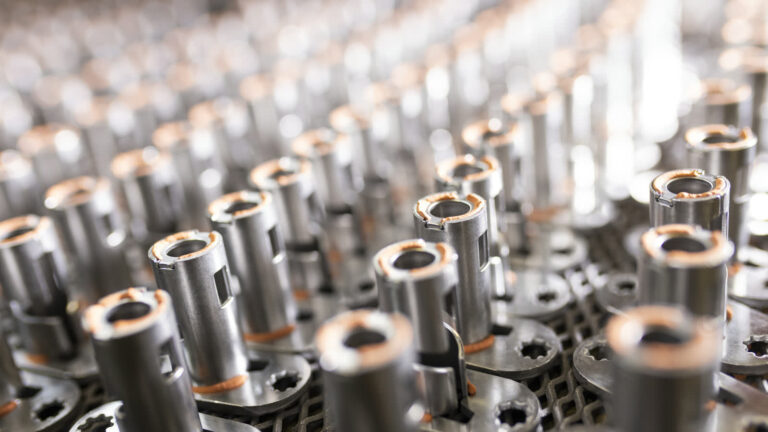
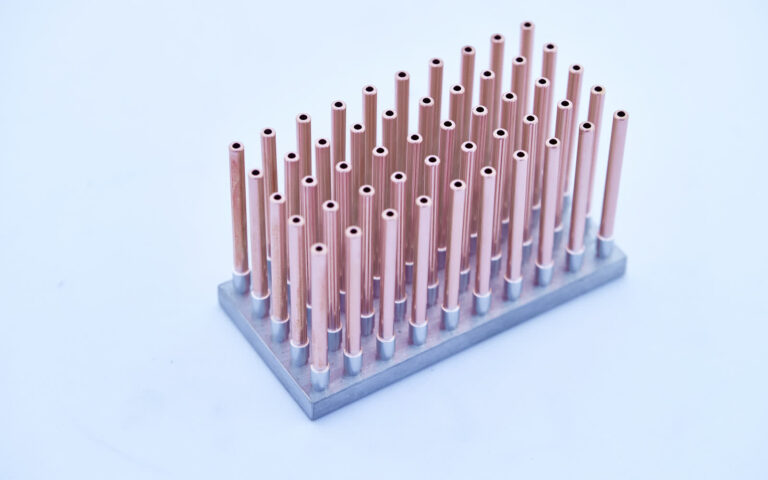
A major advantage of brazing technology is the ability to join a wide variety of materials and material combinations. The following overview shows which materials are frequently used. We check special materials for brazeability.
1.4301
1.4401
1.4571
1.4016
1.4112
1.0038 (S235JR)
1.0045 (S355JR)
1.0503 (C45)
1.0308 (C15)
1.0402 (C22)
2.0040 → Cu-OF (CW008A)
2.0046 → Cu-OFE (CW009A)
2.0044 → Cu-HCP (CW021A)
2.0047 → Cu-PHC (CW022A)
The filler metal is selected according to the base materials and the required component properties. Depending on the application, we use filler metals in the form of paste, powder, foil or wire preforms. Discover our most commonly used filler metals at a glance.
Filler metals according to DIN EN ISO 17672:
Cu 102 (Cu100 / Tm 1,083°C)
Cu 110 (Cu100 / Tm 1,083°C)
Cu 141 (Cu100(P), P max. 0.075% / Tm 1,083°C)
Filler metals according to DIN EN ISO 17672:
Ni 620 (Ni82CrSiBFe / Tm 970-1,000°C)
Ni 631 (Ni95SiB / Tm 980-1,070°C)
Ni 650 (Ni71CrSi / Tm 1,080-1,135°C)
Ni 700 (Ni89P / Tm 870°C)
Ni 710 (Ni76CrP / Tm 890°C)
Ni 740 (Ni60CrPSi / Tm 980-1,030°C)
Filler metal according to DIN EN ISO 17672:
Ag 272 (Ag72Cu / Tm 780°C)
Iron-based filler metal (B-FeCrNiSiP / Tm 1,027-1,097°C)
A total of five continuous furnaces with protective atmosphere are available. Three of these furnaces are specially designed for brazing stainless steels. Depending on the material and filler metal, they can be operated with a mixture of hydrogen and nitrogen or with 100% hydrogen. The other two furnaces are intended for brazing unalloyed steel. In these, the protective atmosphere is generated using exogas.
In our continuous furnaces, we can braze assemblies up to 600 mm wide and 185 mm high. Thanks to the large number of different furnaces, the best system for your components can be selected, both technically and economically.
Process quality and reproducibility
In continuous furnaces with protective atmosphere, a controlled, reducing atmosphere ensures oxide-free, bright metallic component surfaces and optimum wetting conditions. This produces high-grade, metallurgically bonded brazed joints of consistently high quality. The precisely controlled process parameters ensure excellent reproducibility – even with complex component geometries and large quantities.
Productivity and cost-effectiveness
The continuous throughput allows a large number of brazed joints to be processed simultaneously in a single process step. Combined with stable, automated process control, this results in high output and short cycle times. The result is efficient series production with low unit costs and high process reliability.
Environment and safety
Because no flux is used, components can in many cases be processed further directly without subsequent cleaning. This considerably reduces the use of environmentally harmful chemicals and simplifies the overall process. At the same time, the process contributes to clean working conditions and sustainable production.
We are a service-oriented company with a high level of technical advisory expertise, and we are easy to reach.
We stand for cooperative and transparent communication with our customers. Short response times and well-founded technical dialogue ensure efficient, solution-oriented collaboration on an equal footing.
Our quotations are clearly structured, precise in content and consistently tailored to your specific task.
For a high-quality brazed joint, defined technical requirements such as joint clearance, insertion depth and surface condition must be met. We safeguard these parameters in close consultation with you.
We provide comprehensive support with component design as early as the design phase. This ensures that all brazing requirements are met and that open questions are clarified at an early stage.
Defined brazing processes, reproducible furnace programmes and clearly documented work instructions and production specifications form the basis for consistently high-quality, repeatable brazing results.
We also take a holistic view of downstream process steps. From fixtures for the precise pre-joining of components to well-thought-out solutions for leak testing.
Marking, process certificates and in-process quality controls can also be provided.
No. When suitable materials (such as steel, stainless steel, copper) and protective atmospheres are used, brazing is flux-free. The reducing atmosphere chemically cleans the surface during the process.
The process shows its strengths particularly in medium to large series. Thanks to the continuous process, the cost per component is significantly lower than with a batch furnace.
As a rule, no. Because the components do not oxidise (“tarnish”) under protective atmosphere, they come out of the furnace with bright metallic surfaces. This means they can often be processed further or installed directly.
Call us directly
+49 2373 9772-30or
We’ll call you back
Within one working day.
Thank you! We’ll get back to you within one working day.