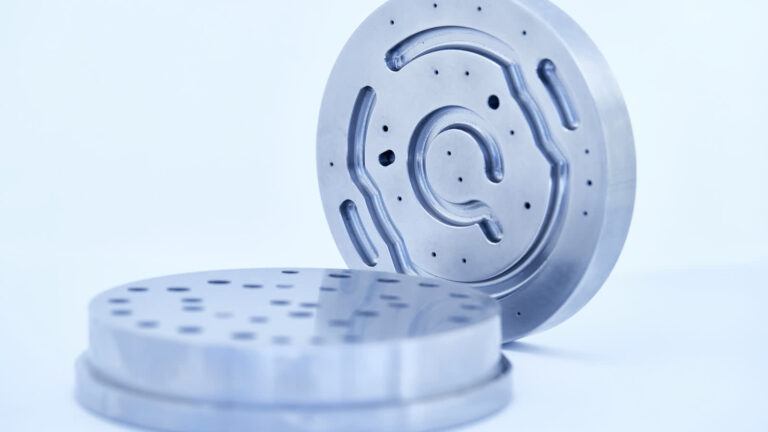
Tools with conformal cooling

Home/Contract brazing
Contract manufacturingVacuum brazing, controlled-atmosphere brazing (furnace brazing) and induction brazing from a single source
Harnischmacher GmbH brazes components as a service provider – from prototypes or single parts to series production. Depending on the material, geometry and quantity, three processes are used: vacuum brazing, controlled-atmosphere brazing and induction brazing. Production takes place at our site in Fröndenberg, North Rhine-Westphalia, and our quality management system is certified to DIN EN ISO 9001.
We are a specialist service provider for joining and brazing assemblies: you supply the components and requirements, we select the appropriate process, carry out the brazing and return the finished assembly to you. This is particularly attractive if you do not have your own furnace systems, only need the process occasionally or have special process and quality requirements.
All three processes are available in-house. So you do not have to decide on one before sending an enquiry: send us your drawing and we will check which process best suits your component and quantity, both technically and economically. We also offer pre-assembly of the individual components and final inspections of the brazed assembly.
If you wish, our collaboration can start even earlier. We advise you as early as the design phase so that your component is designed for brazing – this means any necessary adjustments can be taken into account as early as possible.
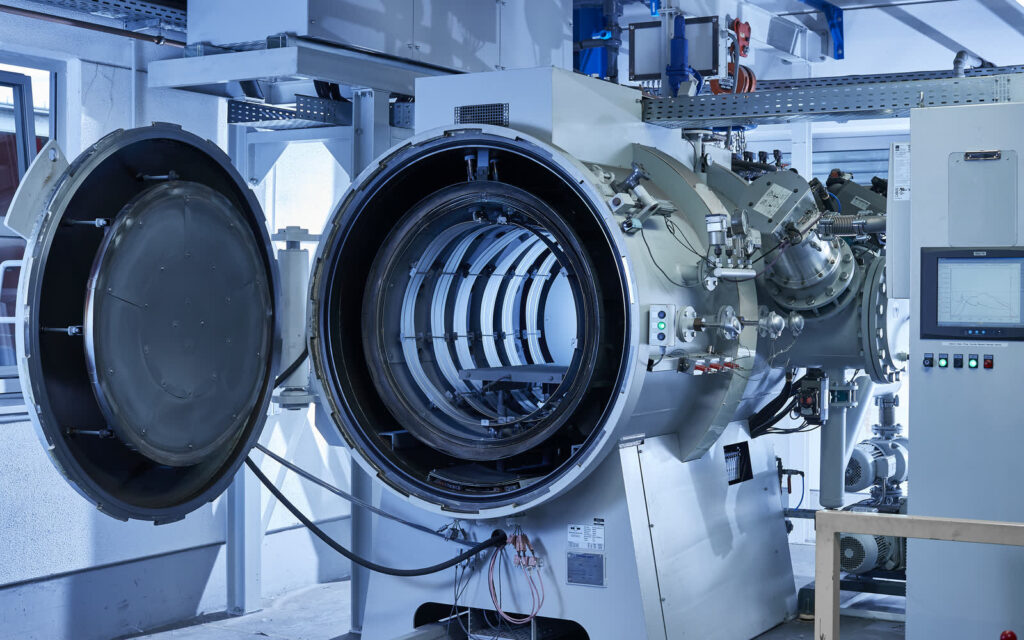
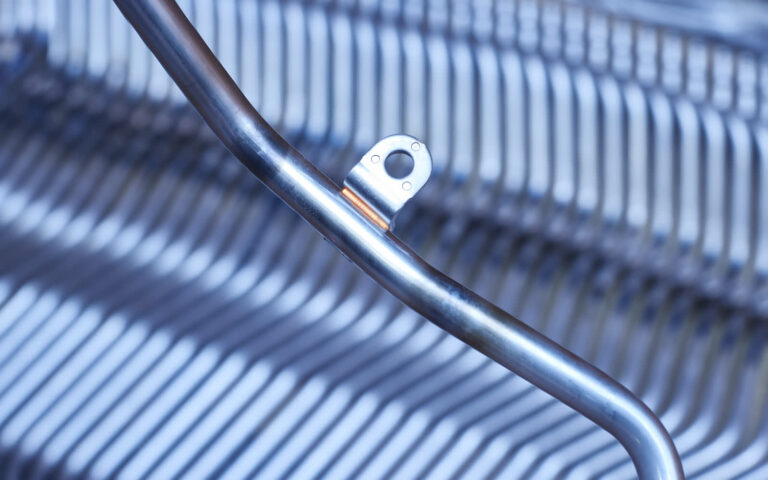
For demanding joints between similar or dissimilar materials – we braze stainless steel, steel, copper, cemented carbide (tungsten carbide), ceramics and special materials.
Five vacuum systems are available. The largest working space measures 2,000 × 900 × 900 mm with a charge weight of up to 1,300 kg. If required, hardening can follow directly after the brazing process.
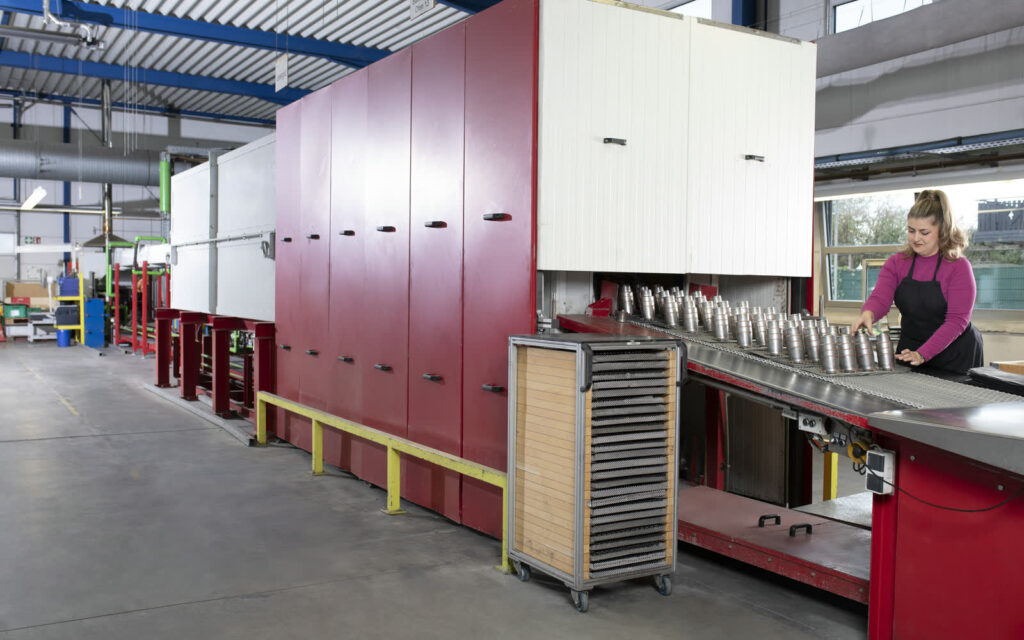
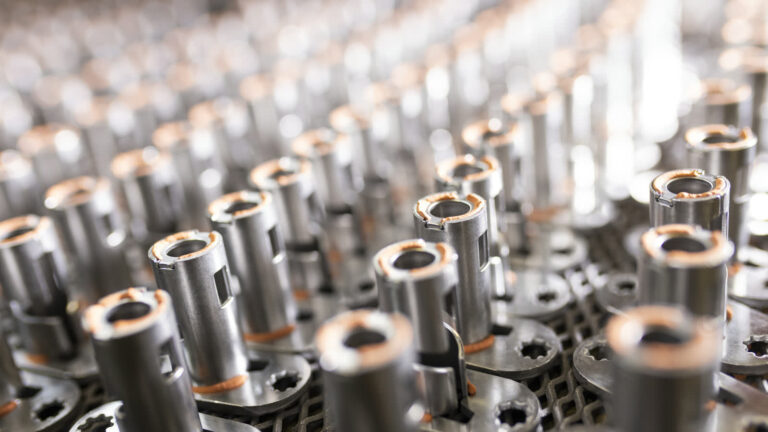
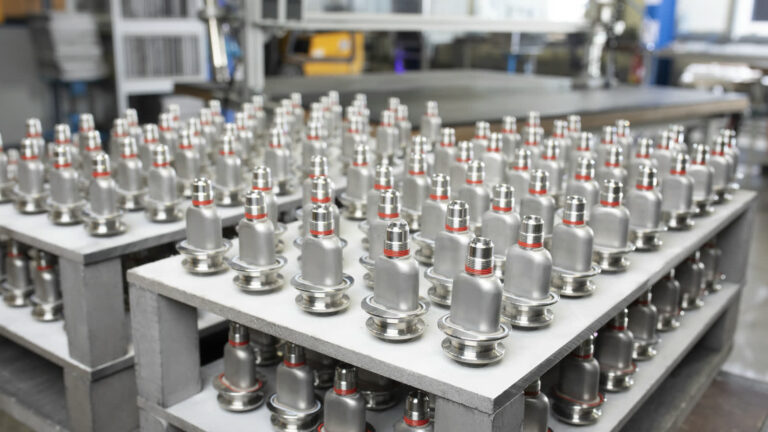
A cost-effective brazing process in which brazing takes place under a protective atmosphere. The components pass through the furnace continuously and leave it bright, so no additional cleaning is needed. Particularly suitable for series production in larger quantities.
Five continuous furnaces are available, three of them specifically for stainless steels. Depending on the application, they can be operated with a hydrogen-nitrogen mixture (H2/N2) or with 100% hydrogen (H2). The maximum size for our systems is H 600 x W 185 mm.
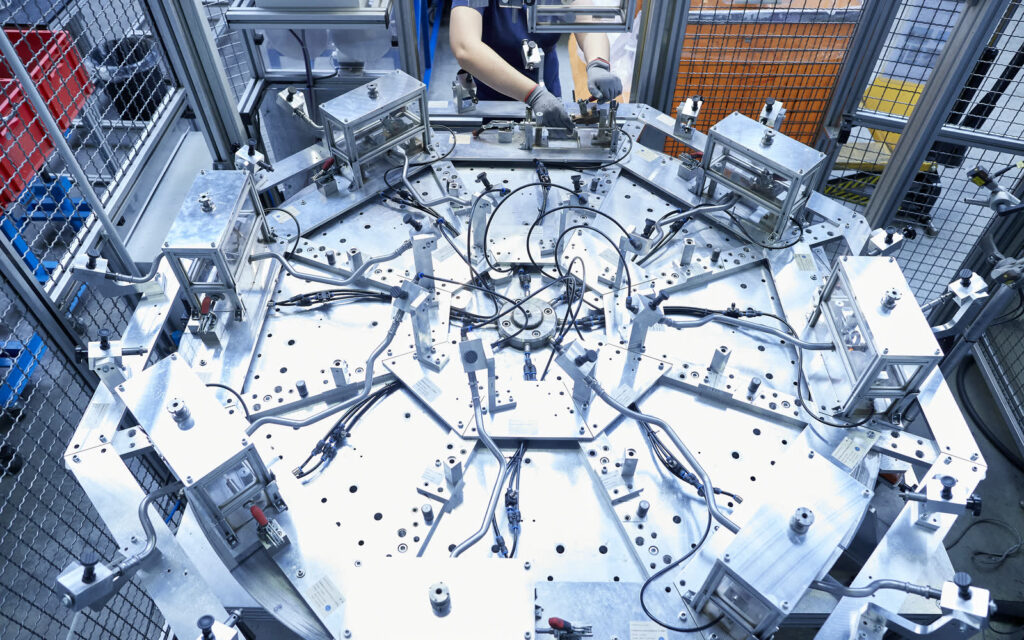
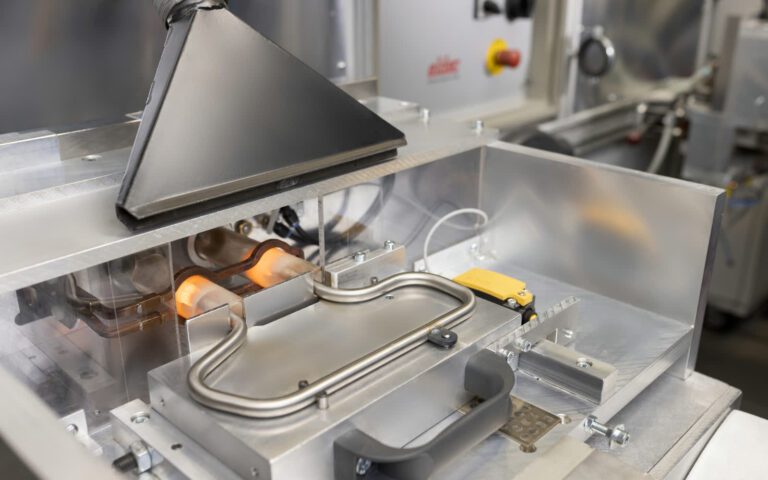
When only the joint area may be heated: rapid, precisely targeted heating under protective atmosphere
Four systems with custom-made inductors, including three rotary indexing tables and one bench-top system for special geometries.
| Vacuum brazing | Controlled-atmosphere brazing | Induction brazing | |
|---|---|---|---|
| Heating | entire assembly | entire assembly | local, joint area only |
| Component size | up to 2,000 × 900 × 900 mm, up to 1,300 kg | up to W 600 x H 185 mm | on request |
| Materials | Stainless steel, steel, copper, cemented carbide, ceramics | Stainless steel, steel, cemented carbide | Stainless steel, steel |
| Flux | not required | not required | not required |
| Special feature | Hardening possible directly afterwards | Brazing under protective atmosphere (N2, forming gas) | |
| Systems | 5 | 5 | 4 |
For a reliable assessment, we need the drawing or a sample, the materials of the parts to be joined, the planned quantity and – if available – the requirements for the brazed joint, such as leak-tightness or strength. We clarify any missing information directly with you.
We check the brazeability, select the process and filler metal and get back to you with a technical assessment and a quotation. Special materials are checked separately for brazeability in advance.
Before series production starts, sampling can be carried out on request – we agree the requirements and scope with you.
Once you have given your approval, we produce in series, with reproducible quality and the agreed documentation. On request, this includes pre-assembly, inspection and marking.
Above all, if you do not have your own furnace systems or buying them does not pay off for the quantities required, if brazing is only needed occasionally and if peaks in capacity need to be absorbed. Outsourcing to a contract manufacturer is also a solution for material combinations that cannot be handled in-house.
We regularly process stainless steels, unalloyed steels and copper materials. Material combinations are also possible, such as cemented carbide on steel or copper on stainless steel. Special materials are checked for brazeability in advance.
Our largest vacuum furnace has a chamber of 2,000 × 900 × 900 mm, and the maximum charge weight is approx. 1,300 kg. Components for the continuous furnaces can be up to W 600 x H 185 mm. For induction brazing, it depends on the component geometry – please send us an enquiry.
Yes. There is no minimum quantity. We produce single parts, samples and prototypes as well as large series.
A drawing or sample, the materials of the parts to be joined, the planned quantity and the requirements for the brazed joint – e.g. leak rates. The more complete the information, the more reliable the assessment.
Yes. For a high-quality brazed joint, defined technical requirements such as joint clearance, insertion depth and surface condition must be met. We agree these parameters closely with you as early as the design phase – adjustments are much easier before production than afterwards.
As a rule, no. In vacuum and controlled-atmosphere brazing, the furnace atmosphere prevents oxidation, so flux is unnecessary. In induction brazing, too, many common materials are brazed flux-free by purging the joint with nitrogen or forming gas.
That depends on the material, geometry, load and the requirements for the joint. One argument in favour of brazing is that the base material is not melted: the component distorts less, materials that cannot be welded can be joined, and many joints can be made in a single operation. We use various welding processes for pre-fixing before brazing.
Options include hardness testing, gauge inspection, leak testing with air or helium, and corresponding marking and labelling. Our quality management system is certified to DIN EN ISO 9001.
All production takes place at our site in Fröndenberg on the Ruhr in North Rhine-Westphalia, between Dortmund and the Sauerland.
We are a service-oriented company with a high level of technical advisory expertise, and we are easy to reach.
We stand for cooperative and transparent communication with our customers. Short response times and well-founded technical dialogue ensure efficient, solution-oriented collaboration on an equal footing.
Our quotations are clearly structured, precise in content and consistently tailored to your specific task.
For a high-quality brazed joint, defined technical requirements such as joint clearance, insertion depth and surface condition must be met. We safeguard these parameters in close consultation with you.
We provide comprehensive support with component design as early as the design phase. This ensures that all brazing requirements are met and that open questions are clarified at an early stage.
Defined brazing processes, reproducible furnace programmes and clearly documented work instructions and production specifications form the basis for consistently high-quality, repeatable brazing results.
We also take a holistic view of downstream process steps. From fixtures for the precise pre-joining of components to well-thought-out solutions for leak testing.
Marking, process certificates and in-process quality controls can also be provided.
Call us directly
+49 2373 9772-30or
We’ll call you back
Within one working day.
Thank you! We’ll get back to you within one working day.